
November 11, 2025 (by: Lawrence F Muscarella, PhD) – This article features Dr. Muscarella’s review of the new guidance document titled “Multisociety guidance for sterilization and high-level disinfection,” which was published earlier this year. His recommendations and guidance are provided to enhance infection prevention and transparency in healthcare. (Dr. Muscarella is the founder and president of LFM Healthcare Solutions, LLC. This article is a draft and may be subject to changes and revisions without further notice.)
Accepting new clients: Dr. Muscarella is accepting new clients seeking expert guidance in infection prevention, the causes and prevention of healthcare-associated infections and other medical errors; disinfection and sterilization; and other related topics.
HIGHLIGHTS
- Several societies and organizations including The Joint Commission issued new guidance, in April, for the disinfection and sterilization of reusable medical devices, including flexible endoscopes.
- This new multisociety document provides guidance that “follows” the Centers for Disease Control and Prevention’s “Guideline for Disinfection and Sterilization in Healthcare Facilities,” which was published in 2008.
- The greater part of this new guidance’s risk assessments, discussions on infection prevention, and recommendations to improve safety are reasonable, appropriate, and evidence-based.
- However, some of the document’s other guidance can be confusing and may raise questions about variations in clinical practices and the risk of infections in endoscopic and operating room settings.
- Gastroenterology & Endoscopy News published an article, in September, that examined this multisociety guidance and featured a few of Dr. Muscarella’s guidance, opinions, and conclusions.
- Additional guidance by Dr. Muscarella, in response to this new multisociety guidance, is provided below with a focus on the disinfection of some types of semi-critical devices and the periodic microbial monitoring of the water used to rinse flexible endoscopes terminally before use.
- This article’s guidance — which also features Dr. Muscarella’s advice on immediate-use steam sterilization (IUSS) — is provided to increase transparency and accountability in healthcare and to reduce the risk of patient infections in endoscopic and operating room settings.
November 11, 2025 (by: Lawrence F Muscarella, PhD) – Several societies and organizations including The Joint Commission issued new guidance, in April, for the disinfection and sterilization of reusable medical instruments, including flexible endoscopes.
This 2025 document — titled “Multisociety guidance for sterilization and high-level disinfection” — provides guidance that “follows” the Centers for Disease Control and Prevention’s “Guideline for Disinfection and Sterilization in Healthcare Facilities,” which was published in 2008.

Like this CDC guideline, for example, the new multisociety guidance document discusses: (a) use of the Spaulding classification scheme for categorizing medical devices based on the their infection risk; (b) the practice of covering a reusable semi-critical medical device with a single-use sheath (or probe cover) to prevent cross-infections; and (c) the use of immediate use steam sterilization (IUSS), among other timely topics.
Presented as questions to which recommendations are provided in response, most of this new multisociety document’s guidance on infection prevention and strategies to prevent healthcare-associated infections are reasonable, appropriate, and well referenced.
An under-reported infection risk?
As an example, the 2025 multisociety guidance acknowledges that “most” pathogen transmissions associated with failures in sterilization and high-level disinfection (HLD) “go undetected” due in part to difficulties detecting bacterial colonizations in patients (in contrast to bona fide cross-infections).
The guidance document clarifies further that if “patients progress to infection, the complexity, and resources required to investigate suspected transmission events, lack of standardized surveillance, and publication bias further limit estimates of the magnitude of failures in sterilization and HLD.”
Addressing this critical but often overlooked topic, these observations are consistent with the findings of others including Dr. Muscarella whose research has found that the risk of ineffective reprocessing, patient exposures, and cross-infections from contaminated reusable medical instruments, including gastrointestinal endoscopes, may be substantially higher than reported and publicly recognized.
Some of Dr. Muscarella’s other recent, relevant articles:
- A Proposal to Include Endoscope-Associated Infections as a Reportable Medicare Measure to Promote Patient Safety (2025)
- In Support of Patient Safety, Healthcare Access, and Medicare Payment for a Single-Use Bronchoscope Model (2024)
- Esophageal Tissue Tears and Other Adverse Events Reported When Using Duodenoscopes with a Single-Use Endcap (2023)
Single-use sheaths, disposable covers
One of this multisociety guidance’s particularly appropriate recommendations is to use high-level disinfection — not low-level or intermediate-level disinfection — “for processing semi-critical devices even when a sheath is used.” (An example of these lower levels of disinfection would be manually wiping the device’s surfaces using a disinfectant.)
As rationale, the 2025 document confirms that studies have shown residual contamination remaining on semi-critical devices following removal of the single-use sheath or disposable cover that had been placed over the reusable device during the procedure.
Reusable devices are prolific in healthcare. They’re used in hundreds of thousands of procedures every year, so it’s critical to have evidence to support the types of cleaning and sterilization or disinfection that’s required to prevent transmission of infections from one patient to the next. — The lead author of the 2025 multisociety guidance, according to a hospital website.
According to the multisociety document, “[u]ltrasound probe covers, including sheaths, can fail due to perforations or probe contamination during cover removal. Sheath perforation after transrectal, ultrasound-guided prostate biopsies has been demonstrated in up to 9% of procedures.”
Notably, however, while emphasizing that the sheaths “do not eliminate the need for HLD for a semi-critical reusable medical device,” the new guidance includes the caveat: “unless otherwise specified by the MIFU (manufacturers’ instructions for use).” (Refer to the new guidance document’s Section 3, question no. 20 for further information about this exception.)
 Infection Case Reviews, Forensic Analyses, Expert Guidance: LFM-Healthcare Solutions, LLC provides medical expertise for legal representatives, device manufacturers, and medical facilities specializing in healthcare-associated infections linked to contaminated reusable medical equipment.
Immediate use steam sterilization (IUSS)
While most of the 2025 multisociety guidance’s recommendations are practical and well-referenced, some of its other advice Dr. Muscarella found to be confusing and to raise questions for him about variations in clinical practices and the risk of infections in endoscopic and operating room settings.*
The new multisociety guidance cautions, for example, that facilities “not routinely use” immediate use steam sterilization (IUSS).
Continued — This article’s review of the 2025 multisociety guidance’s recommendations for using IUSS continues in Dr. Muscarella’s supplemental article, the second in a series of two, titled “Immediate Use Steam Sterilization for Surgical Instruments: Dr. Muscarella’s Guidance and Position Statement.”
I advise caution whenever using IUSS to process an instrument, particularly a surgical implant — and even more so if immersion of a hot, flashed implant into a “sterile” solutions or water following IUSS is anticipated to cool the device prior to its immediate introduction into the sterile field. — Lawrence F. Muscarella, Ph.D
Dr. Muscarella’s supplemental article may provide the most comprehensive review and guidance published to date on the use of IUSS in operating room settings.
This article’s citation: Muscarella LF. Dr. Muscarella’s Review of the New Multisociety Guidance for Disinfection and Sterilization in Healthcare Facilities. Discussions in Infection Control November, 11 2025.
Endoscope-related outbreaks of P. aeruginosa
In September, Gastroenterology & Endoscopy News published an article — titled “New Guidance Issued On HLD and Sterilization” — that included some of Dr. Muscarella’s insights into and commentary about the new 2025 multisociety guidance.
The article quoted Dr. Muscarella to say that “the guidance was ‘fairly good'” but that he expressed some misgivings. “‘A lot of the (2025 multisociety) guidance made sense to me,’ said Dr. Muscarella, who has published on outbreaks linked to contaminated reusable devices. ‘There were, though, a number of sections that did not.’”
For example, the 2025 guidance states that several reports, in contrast to the findings of Nelson and Muscarella (2006) and others, have documented contamination of endoscopes from rinse water, but that the cases were “ultimately” found “to represent pseudo-outbreaks” and “none were clinically significant.”
Through the years, potentially dangerous waterborne bacteria including Pseudomonas aeruginosa have been linked to endoscope contamination and healthcare-associated outbreaks. — Lawrence F. Muscarella, Ph.D.
Discussing his research, Gastroenterology & Endoscopy News quoted Dr. Muscarella to counter by saying that several published investigations have linked both true and pseudo infections and outbreaks of waterborne bacteria, including P. aeruginosa, to contamination of the water used to rinse the flexible endoscope typically performed using an automated reprocessing device.
In one case, Alvarado et al. (1991) reported cases of colonizations and infections with P. aeruginosa following upper gastrointestinal endoscopy. The endoscopes used to perform the procedures were disinfected using an AER. Samples of the AER’s water used to rinse the endoscopes, like the endoscopes and infected patients, were found to be contaminated with the Pseudomonas.
In another case, Struelens et al reported (1993) similarly reported a multi-strain outbreak of gram-negative bacteremia in patients undergoing endoscopic retrograde cholangiopancreatography (ERCP). One of the outbreak’s strains of P. aeruginosa was isolated in multiple patients, two of the duodenoscopes (used to perform the ERCP) disinfected using an AER, the water used by the AER to rinse the endoscopes, and the tap water in the endoscopy suite.
As a third example, USA Today wrote an article in 2003 that discussed a warning letter the FDA wrote to a manufacturer of an automated device labeled to reprocess instruments including flexible endoscopes. According to the news article, the FDA warning letter, dated April 23, 2001, stated that a noted association of the automated device “with patient infections usually caused by waterborne organisms leads us to question” the quality and safety of the device’s (filtered) rinse water.
Forensic Case Reviews, Expert Guidance, Infection Investigations: LFM-Healthcare Solutions, LLC provides medical expertise for legal representatives, device manufacturers, and medical facilities specializing in healthcare-associated infections linked to contaminated reusable medical equipment.
Monitoring water systems, rinse water
In a section discussing the type of water to use when rinsing medical devices in a mechanical washer, the 2025 multisociety guidance aptly advises that “[w]ater systems themselves can fail and must undergo regular maintenance and monitoring.”
Unlike for mechanical washers, however, the 2025 guidance does not recommend routine monitoring to test the microbial quality and content of the water used for medical device processing — for example, the water used to terminally rinse flexible endoscopes after chemical immersion.
While acknowledging some exceptions warranting water monitoring, the multisociety guidance states that “existing evidence does not support routine point-of-use testing of water quality to reduce the risk of transmission of infectious pathogens.”
In disagreement to this stance, Dr. Muscarella previously published, for the first time in the literature in 2002, the recommendation to monitor the water used to rinse endoscopes during reprocessing for infectious microorganisms, based on many reports linking true (and pseudo) outbreaks to flexible endoscopes contaminated with waterborne microorganisms.
Periodic monitoring of the water used to rinse endoscopes after disinfection is necessary, in my view, to verify that the water does not contain dangerous bacteria that could pose an infection risk to patients.
As Muscarella and Nelson (2002) explained, monitoring the water periodically (e.g., weekly, monthly, quarterly depending on the findings of the facility-specific risk assessment) would seem necessary to verify the water does not pose an infection risk, as well as to provide “independent verification that the bacterial filter, which is used to improve the microbial quality of the rinse water used by virtually all AERs (automated endoscope reprocessors), is working properly and producing ‘bacteria-free’ or ‘sterile’ water as labeled.”
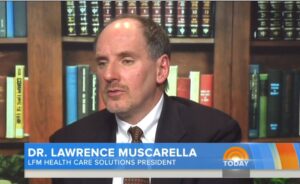 The September (2025) issue of Gastroenterology & Endoscopy News, quoting Dr. Muscarella, wrote that “hospitals generally filter the rinse water (used during automated endoscope reprocessing) to remove bacteria, but filters don’t have alarms on them or bells that go off when they’re failing, so it can be unclear when they require changing unless periodic microbiological testing is performed.”
Rigid laryngoscopes
The 2025 multisociety guidance document recommends that facilities “[c]lean and low-level disinfect portions of a (semi-critical) device that do not come in contact with mucous membranes or non-intact skin (eg, cables, connectors) according to the device’s (manufacturer instructions for use.”
This recommendation could be interpreted to apply to rigid laryngoscopes, among other devices, which are semi-critical devices that feature a blade connected to a handle.
Quaternary ammonium products and other cleaner/disinfectants, labeled to achieve intermediate-level (or low-level) disinfection, including alcohol or other disinfectant wipes, should never be used for reprocessing flexible and rigid laryngoscopes or other semicritical devices. — State of California—Health and Human Services Agency (2007)
The blade, but not usually the handle, generally contacts the patient’s mucous membranes directly when examining the patient’s airway during the procedure (e.g., to facilitate proper placement of a tracheal tube). Nevertheless, reports document contamination of the rigid laryngoscope’s handle with blood and potentially infectious organisms.
Whether this 2025 multisociety guidance is advising that wiping the laryngoscope handle with a low-level disinfectant (after cleaning) is sufficient to prevent infections is unclear. Some guidance would agree the handle is non-critical, while other published guidelines would disagree, having classified the blade and handle both as semi-critical devices.
Providing clearer guidance, the state of California, in 2007, endorsed specific advice Dr. Muscarella had previously published recommending that both a rigid laryngoscope’s blade and handle be cleaned followed by high-level disinfection or sterilization.
Dr. Muscarella’s recommendations
In response to his review of the 2025 guidance document, Dr. Muscarella provides the following recommendations and guidance to healthcare facilities to reduce the risk of confusion, errors and healthcare-associated infections:
Sheathed semi-critical instruments:
1. Clean semi-critical devices followed by high-level disinfection (at a minimum) regardless of whether a single-use sheath or protective cover is used to prevent contamination of the device during the procedure.
A. Review the semi-critical device’s labeling for step-by-step instructions for proper cleaning and high-level disinfection.
B. Read Dr. Muscarella’s peer-reviewed article — titled “Recommendations to resolve inconsistent guidelines for the reprocessing of sheathed and unsheathed rigid laryngoscopes” — for more detailed guidance.
C. Also read Dr. Muscarella’s related article, “Is A Less Robust Level of Disinfection Safe for Some ‘Semi-Critical’ Devices?” (JUne, 2021).
Note: According to the 2025 multisociety document, “[u]ltrasound probe covers, including sheaths, can fail due to perforations or probe contamination during cover removal. Sheath perforation after transrectal, ultrasound-guided prostate biopsies has been demonstrated in up to 9% of procedures.”
Rigid laryngoscopes:
2. Clean and high-level disinfect (or sterilize) the rigid laryngoscope as detailed in California’s comprehensive, step-by-step guidance (2007) for reprocessing the rigid laryngoscope’s both blade and handle.
A. Read California’s guidance (2007) on reprocessing both a rigid laryngoscope’s blade and handle — along with Dr. Muscarella’s two peer reviewed articles titled: (1) “Reassessment of the risk of healthcare-acquired infection during rigid laryngoscopy” and (2) “Recommendations to resolve inconsistent guidelines for the reprocessing of sheathed and unsheathed rigid laryngoscopes” — for more detailed guidance.
Immediate use steam sterilization (IUSS):
3. IUSS may be performed for surgical instruments, but only in an “emergency situation.”
4. Further, do not use IUSS for implantable devices.
Continued … Click here to read Dr. Muscarella’s recommendations and advice for using IUSS to process surgical instruments and implantable devices. His advice — provided in the second article in this series and titled “Immediate Use Steam Sterilization for Surgical Instruments: Dr. Muscarella’s Guidance and Position Statement” — may provide the most comprehensive review and guidance published to date on the use of IUSS in operating room settings.
5. Periodically monitor the microbial quality of the water used to rinse endoscopes following chemical immersion to ensure the water’s safety and compliance with the water filtration system’s labeling claims — for example, that the rinse water is “bacteria-free.”
Note: Several published investigations have linked true (and pseudo) outbreaks of waterborne bacteria, including P. aeruginosa, to contamination of the water used to rinse the flexible endoscope typically reprocessed using an automated device.
A. Read Dr. Muscarella’s peer-reviewed article — titled “Application of environmental sampling to flexible endoscope reprocessing: the importance of monitoring the rinse water” — for more detailed guidance.
Note: The frequency of monitoring the water (e.g., weekly, monthly, quarterly) would be based on the findings of a facility-specific risk assessment.
Accepting new clients: Dr. Muscarella is accepting new clients requesting expert guidance in infection prevention, hospital infections, sterilization, disinfection, endoscope reprocessing and related topics — click here for more details.
Article by: Lawrence F Muscarella, PhD. LFM Healthcare Solutions, LLC. Dr. Muscarella is the president and founder of LFM Healthcare Solutions, LLC, an independent quality improvement company. Click here for a list of his quality improvement healthcare services. E: Larry@LFM-HCS.com. [LFM-ver-2.0]
Copyright © (2025) LFM Healthcare Solutions, LLC. All Rights Reserved. The content of this email, including text, figures, research and analysis, is copyrighted and may not be reproduced, republished, or quoted in whole or in part, even if properly attributed to Dr. Muscarella, without Dr. Muscarella’s prior written permission. Unauthorized use of this email’s content is explicitly prohibited and constitutes infringement. Email Dr. Muscarella for written authorization at: Larry@LFM-HCS.com
Acknowledgment: This article was sponsored, in its entirety, by LFM Healthcare Solutions, LLC, which is responsible for this article’s content. Dr. Muscarella founded this infection prevention and medical device safety company in 2013.
Expert services: Details about the quality and expert services Dr. Muscarella provides healthcare facilities, patients, device manufacturers and legal representatives are available here.
* Additional disclosures: This article features Dr. Muscarella’s opinions, perspectives and recommendations based on his review and interpretation of the multisociety guidance document (2025). His views are necessarily subject to debate, disagreement and further discussion. Indeed, some of his conclusions and insights about IUSS herein may be incomplete or even potentially incorrect (thus warranting independent review for accuracy). While unrelated to this article, Dr. Muscarella has provided guidance on occasion for Ambu, a manufacturer of single-use flexible endoscopes.